
Inflation print for food articles, as a basket, remained nearly flat at 7.47 per cent during the month.

The broader NSE Nifty fell 78.75 points, or 0.70 per cent, to close at 11,234.55.
The bank lost out on fairly meaningful quantum of fees from point of sale terminals and ATM usage during the demonetisation exercise.

From the 30-share basket, 28 scrips suffered losses. Over 200 stocks were at their 52-week low in Tuesday's trade.

Top losers in the Sensex pack included Yes Bank, Vedanta, IndusInd Bank, Tata Steel, L&T, SBI, NTPC, Kotak Bank, HDFC, HDFC Bank, PowerGrid, Infosys and ITC, falling up to 4.18 per cent.

Declining vegetable prices brought down the retail inflation to a 15-month low of 4.59 per cent in December and within the comfort zone of the Reserve Bank, government data showed on Tuesday. It is for the first time during the current fiscal that the Consumer Price Index (CPI) based inflation print is below 6 per cent or in the RBI's target range of 2 to 6 per cent. The central bank factors in the CPI-based inflation while arriving at its monetary policy. The inflation in December 2020 came down from 6.93 per cent in November, mainly on account of 10.41 per cent decline in vegetable prices over the year-ago period.
Kotak Bank was the top gainer in the Sensex pack, ending 4.31 per cent higher. PowerGrid, TCS, ICICI Bank, SBI, HCL Tech, NTPC, Infosys, Bajaj Finance, HDFC duo, ONGC, Vedanta and IndusInd Bank too rose up to 2.84 per cent.

Infosys was the top gainer in the Sensex pack, rallying around 7 per cent, followed by TCS, IndusInd Bank, ONGC, HDFC Bank and HCL Tech. On the other hand, ITC, Bajaj Finance, Kotak Bank and Sun Pharma finished in the red.

Seasonal weakness may result in modest sequential revenue growth for large Indian IT firms in the January-March 2016 quarter, analysts said.

'Investors should not commit fresh money to these stocks right now, unless they can hold for the next three to four years.'

India's industrial production grew by 1 per cent in December, official data showed on Friday. According to the Index of Industrial Production (IIP) data, the manufacturing sector output grew by 1.6 per cent in December 2020.

The decline is attributed to lower salary growth and a rise in households' financial liabilities.

There will be pressure on the fiscal situation, especially at a time when the monsoon can also disappoint. More populist expenditure is on cards if the mandate is a hung Parliament or a coalition government.

From its all-time peak of 38,989.65 scaled on August 29 this year, the Sensex has fallen by 2,921.32 points, or 7.5 per cent, to 36,068.33.

About 55 per cent of the public offers that hit the market since 2008 are still trading below their issue price.

The buyback price is at around 28 per cent premium to the current market price of Rs 67 on the Bombay Stock Exchange

RBI is expecting the rupee to stay close to Rs 75 to a dollar, as COVID-19 forces foreign funds to withdraw from emerging markets.

Top gainers in the Sensex pack include SBI, Yes Bank, Tata Motors, L&T, ICICI Bank, IndusInd Bank, ONGC, Maruti, M&M, Axis Bank, RIL, Hero MotoCorp, HDFC, Vedanta, Asian Paints, Tata Steel and Bajaj Finance, rising up to 7 per cent.

The biggest losers of the session include Reliance, Infosys, TCS, ICICI Bank, HDFC twins, ITC, Maruti, L&T, HUL, Axis Bank, Wipro and IndusInd Bank, cracking up to 4 per cent.
The regulator has asked portfolio managers not to leverage the portfolio of clients for investment in derivatives and not indulge in speculative transactions that are not accompanied by actual delivery, except for derivatives trades. This is done with the intention of reducing volatility in the market and curbing undue risks.

Check out some of the stocks that will react on the basis of their numbers in the near term.

In the Sensex pack, Yes Bank, IndusInd Bank, Infosys, ICICI Bank, TCS, SBI, Reliance Industries, ONGC, Axis Bank and NTPC rose up to 2.66 per cent.

There was broad-based rally with participation across sectors creating enormous wealth for investors but starting 2018, the rally got concentrated into select large-cap companies with under performance in broader markets.

TCS and Infosys were the top losers in the Sensex pack, falling up to 3.39 per cent.

Top losers in the Sensex pack included M&M, SBI, Yes Bank, Asian Paints, HDFC, Tata Steel and L&T, shedding up to 2.55 per cent. The broader NSE Nifty settled 79.80 points, or 0.72 per cent, down at 10,996.10.

Equity benchmark Sensex tumbled 674 points on Friday, weighed by losses in banking stocks as an unabated spike in new coronavirus cases fuelled uncertainty over the economic impact of the pandemic. After hitting a low of 27,500.79 during the day, the 30-share BSE barometer ended 674.36 points or 2.39 per cent lower at 27,590.95. The NSE Nifty shed 170 points, or 2.06 per cent, to finish at 8,083.80.

Among other segments, home broadband subscriptions have picked up and the virtual private network service, too, increased by around 15 per cent.

Some of the popular brands that would be impacted include Phensedyl (Abbott), Tixylix (Abbott), Gluconorm PG (Lupin), Ascoril D (Glenmark), Solvin Cold (Ipca), D Cold Total (Paras Pharma).

Top gainers of the session included Bajaj Auto, Kotak Bank, M&M, Vedanta, IndusInd Bank, Asian Paints, HDFC Bank, Reliance Industries, HUL, HDFC, ITC, Tata Steel and Tata Motors, rallying up to 5 per cent.

Among Sensex components, shares of Reliance Industries, India's largest company by market value, stole the show by surging 1.61 per cent to their highest in over three months.

Top losers in the Sensex pack included ICICI Bank, Tata Steel, Vedanta, HDFC IndusInd Bank, Tata Motors, RIL and ONGC -- falling up to 4.45 per cent.
In the Sensex pack, Axis Bank, Tata Motors, Infosys, Kotak Bank, HDFC Bank, RIL, Bajaj Auto, SBI, HUL, Tata Steel, Vedanta, HFDC, TCS, ITC and Sun Pharma jumped up to 4.64 per cent.
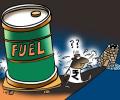
Inflation in food articles, fuel and power contracted in July.
'Investors should plan and make investments strictly on the basis of their risk profile.' 'They should not bite more than they can chew.'

Monsoons have had limited effect on market returns for a given year, report Sachin Mampatta and Sundar Sethuraman.

Shares of Motilal Oswal Financial Services, Edelweiss Financial Services and IIFL Holdings have all doubled in the past one year against the Sensex's 23 per cent gain.
Other losers included HCL Tech, Yes Bank, IndusInd Bank, TCS, ONGC, Bajaj Finance, PowerGrid, Vedanta, Asian Paints, NTPC and Hero MotoCorp, which shed up to 4.07 per cent.

The fall was led by L&T, IndusInd Bank, PowerGrid, NTPC, TCS, ICICI Bank, Axis Bank, Hero MotoCorp, Bharti Airtel and SBI, declining up to 2.64 per cent.
All sectoral indices on the BSE and NSE ended in the red, led by realty, banking, metal, pharma, pharma and financial stocks.
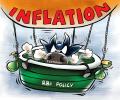
Currently, the retail inflation is well below the RBI's comfort level. The government has asked the central bank to keep inflation in the range of 4 per cent.
